
Eminent Domain & Neighborhood Redevelopment: Two Perspectives
The future of vacant and neglected properties in St. Louis is once again part of the public conversation. On September 16, St. Louis Public Radio reported that a St. Louis Circuit Court judge ruled that the city’s Land Clearance for Redevelopment Authority can move forward with using eminent domain to acquire 89 properties near the new National Geospatial-Intelligence Agency (NGA) campus. The city has said the effort is intended to address vacant and abandoned properties and support redevelopment in the surrounding neighborhoods, while the property owners’ representatives have said they plan to appeal the decision.
The ruling comes as St. Louis continues to consider how to address vacant property, neighborhood disinvestment, and redevelopment in North St. Louis. Those questions are not new, and they have been the focus of decades of work and debate among community development practitioners, neighborhood organizations, property owners, and public officials. What tools should be used to address vacant, neglected, or underutilized property and encourage neighborhood investment? Eminent domain is one such tool, but its use has also generated disagreement over property rights, public purpose, redevelopment, and how communities should be stabilized.
Against that backdrop, CBN is pleased to share this perspective from Jim Roos, a longtime St. Louis community development practitioner and advocate. Drawing on more than five decades of experience in housing, neighborhood development, property rehabilitation, and public policy, Jim offers his thoughts on several issues affecting neighborhood stabilization, including selective rehabilitation, rental housing, clearing and greening, and eminent domain. Through his work with Neighborhood Enterprises, Sanctuary IN the Ordinary, and local neighborhood organizations, Jim has developed a firsthand perspective on the challenges and opportunities facing St. Louis neighborhoods. We’re sharing his perspective as part of CBN’s ongoing effort to elevate ideas and experiences that contribute to conversations about the future of St. Louis neighborhoods. The views expressed in the following piece are his own and reflect his experience and perspective.
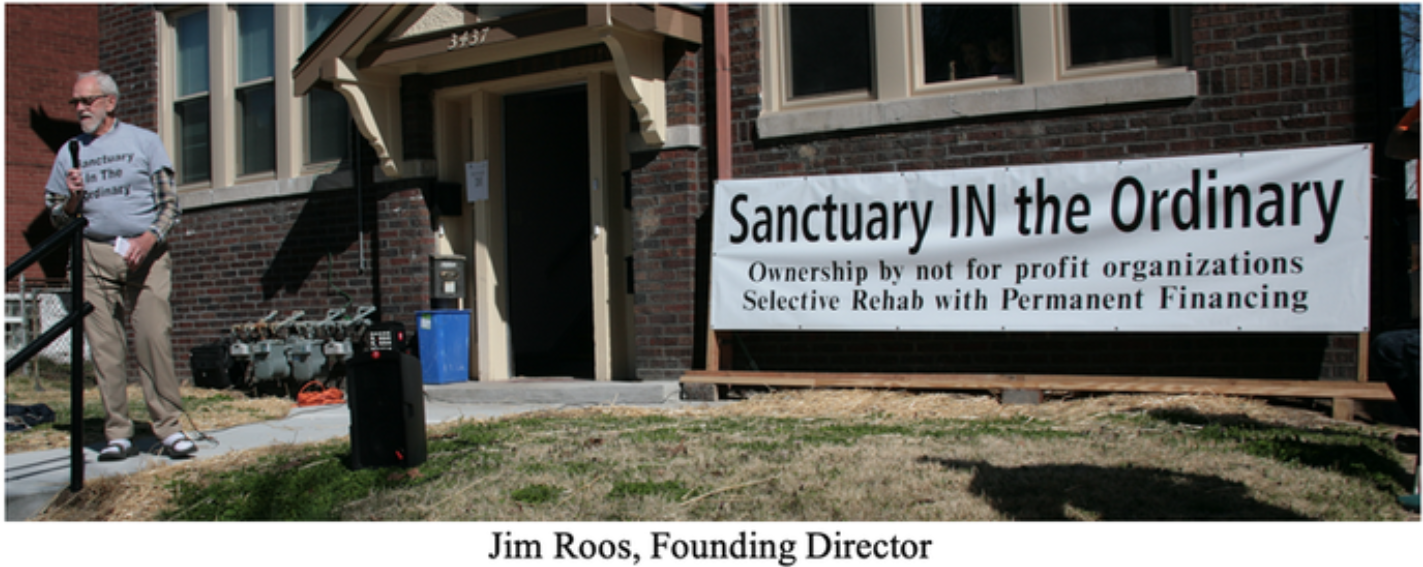
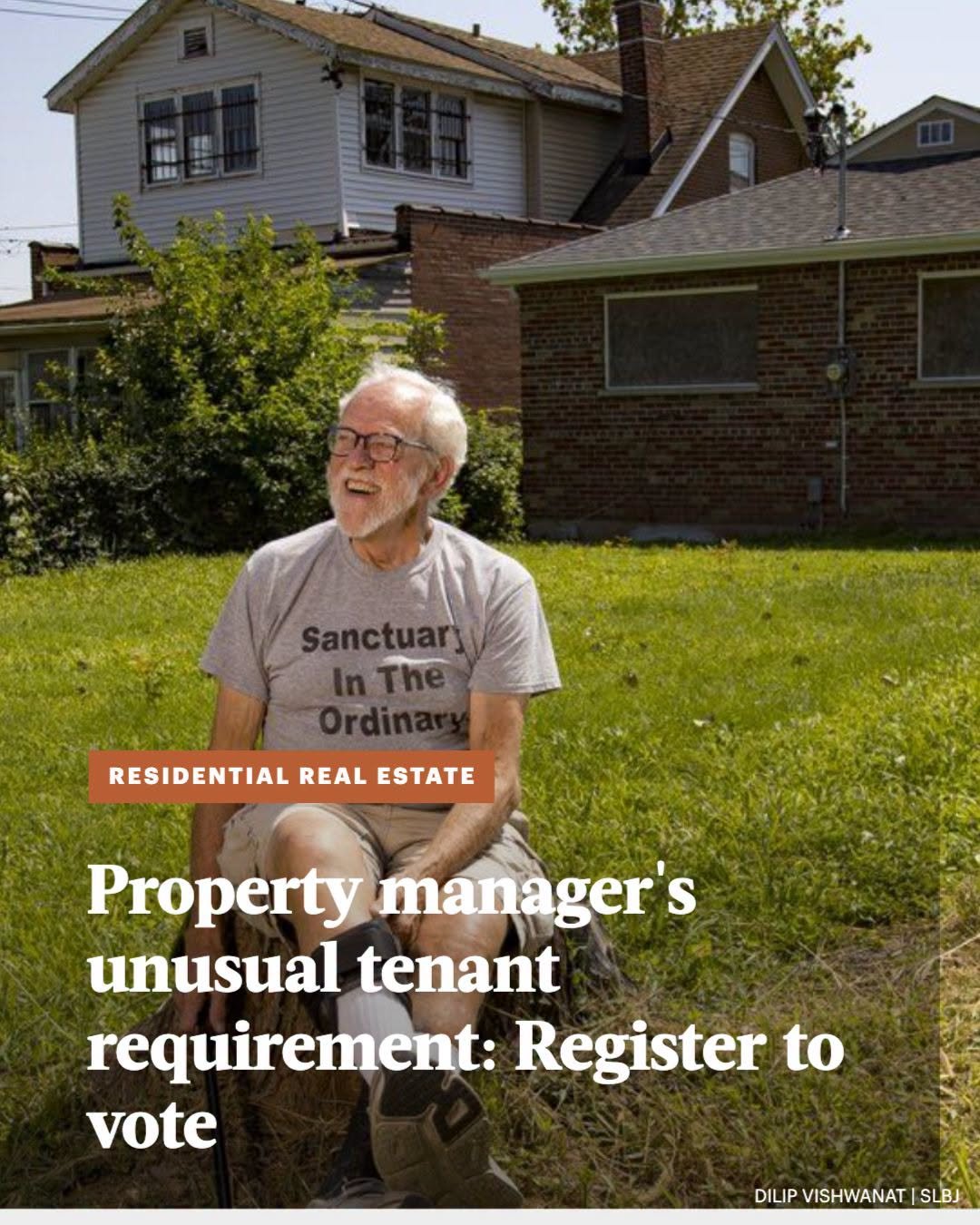
St. Louis Business Journal image
Sustainable Clearing & Greening
Sustainable Clearing & Greening is a committee of Sanctuary IN the Ordinary (SITO), a 501(c)(3) nonprofit organization.
Jim Roos is an outlier, to use Malcolm Gladwell’s term. For 45 years, 1971–2018, he used selective rehab, nonprofit ownership, and some help with financing, to create and maintain hundreds of decent, lower-cost rental units. He did this through Neighborhood Enterprises (NE), a property management company, and Sanctuary IN the Ordinary (SITO), the nonprofit partner to NE that owned many of the units.
In 2019, Roos met with many bankers, public officials, and neighborhood leaders. He learned that most bankers were willing to lend 75% LTV to nonprofits that had 5% equity and 20% interest-free financing. He learned that competent management and clearing/greening needed to be added to the SITO strategy. In 2020–22, Roos revived SITO and selective rehab. The Post-Dispatch wrote about this on February 8, 2022.
Clearing Overgrowth and Trash
In 2023, two years before the tornado, Roos began to clear lots across the alley from two buildings just west of 2800 Goodfellow that he had managed or owned since 2007. He raised $104,000 in gifts to SITO for this work.
In October 2024, CDA awarded $100,000 to Wellston Loop CDC to clear more lots. For unknown reasons, that money is still not available. Is it ineptness or obstruction?
New development and tornado recovery requires deep clearing of large surrounding areas. Numerous developments in overgrown and trashed areas are weak or have failed. Roos can document this.
Home Ownership or Rental
If neighborhoods are distressed, there are usually problems with rental housing. Yet most remedies help only owner occupants (OOs). It is a pipe dream to think that one can convert tenants to capable OOs or attract new OOs if rental housing is out of control.
To retain and attract OOs, rental housing must first be stabilized. Stabilizing requires strong nonprofits and some financing for selective rehab, probably from the Affordable Housing Commission.
Eminent Domain
In 2009, Roos opposed eminent domain for Paul McKee’s plan and in 2024 against McKee. Since the 1980s, Roos has observed and experienced what he describes as abuses of eminent domain.
In his view, eminent domain for private development is “Unfair, Unnecessary, and Ruthless.” Roos can document his concerns. Instead of eminent domain, he argues that the city should secure and clear neglected private property and offer the property for sale the following year if the bill is not paid.
Jim Roos can be reached at 314-805-4206 and jimroos@sitohousing.org. He is located at 3012 Lafayette Ave., St. Louis, MO 63104
He is the Chair of Sustainable Clearing & Greening, working with and/or for Wellston Loop Community Development Corp., Sanctuary IN the Ordinary, and Wells-Goodfellow Neighborhood Association.

Sanctuary IN the Ordinary (SITO) image
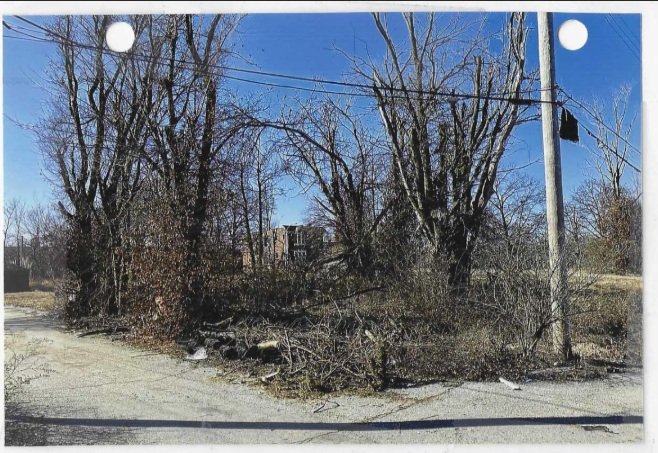
SITO cleared this vacant lot at Terry Avenue in 2026
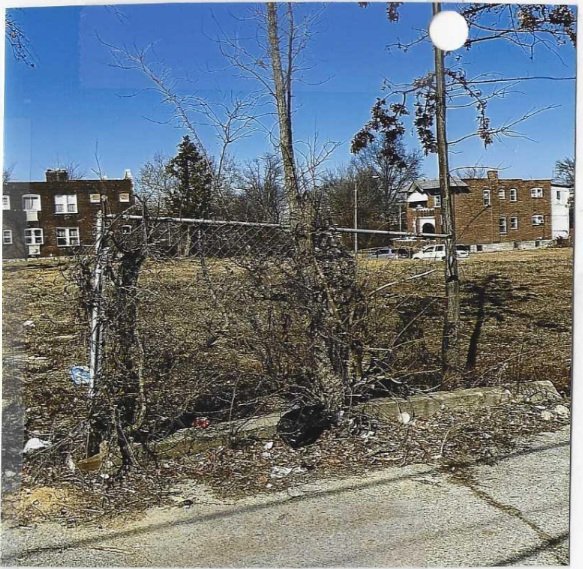
SITO cleared this vacant lot in 2026
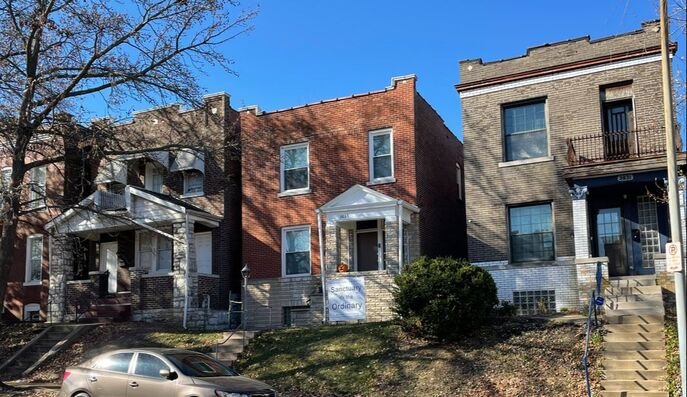
SITO image
The debate over eminent domain reflects two different perspectives on how St. Louis should address long-neglected properties. Supporters of its use in redevelopment efforts point to the government's ability to acquire vacant or abandoned properties when individual ownership or other approaches have not resulted in redevelopment, with the goal of putting those properties back into productive use. In the current NGA-area case, city officials have described the acquisition of 89 properties as a step toward addressing blight and advancing redevelopment.
Critics, including Jim Roos, raise different concerns. They argue that the power to take private property can be too broad, particularly when it is used in connection with private redevelopment, and that other approaches, such as securing neglected properties, clearing overgrowth and trash, rehabilitation, and stronger nonprofit ownership and management, should be considered. Roos' perspective is shaped by decades of working with housing and neighborhood properties in St. Louis.
Both perspectives point to the same underlying challenge: how to move vacant and neglected properties toward productive use while balancing neighborhood revitalization, property rights, public investment, and long-term community stability. As St. Louis moves forward with redevelopment efforts around the NGA campus and across neighborhoods affected by decades of disinvestment and more recent damage, the conversation over which tools are appropriate is likely to continue.
