
Understanding Our Community + Economic Development Ecosystem: Part 1 Summary
In 2023, CBN among other organizations including Invest STL, SLACO, and Civic Insight, developed a collaborative partnership to assess the scope and capacity of the community development sector in St. Louis. These entities surveyed 22 community-based development organizations (CBDOs) which included 19 community development corporations (CDCs) and 3 place-based economic development organizations.
Data gathered by the partnership allowed for a comparison of other cities’/communities’ CBDOs to St. Louis to better understand the position of the community development sector. Through the analysis of the data, the group identified areas for the St. Louis community to support and strengthen the local CBDOs such as community investment, community alignment, addressing racial disparities, and staffing.
Programmatic Focus
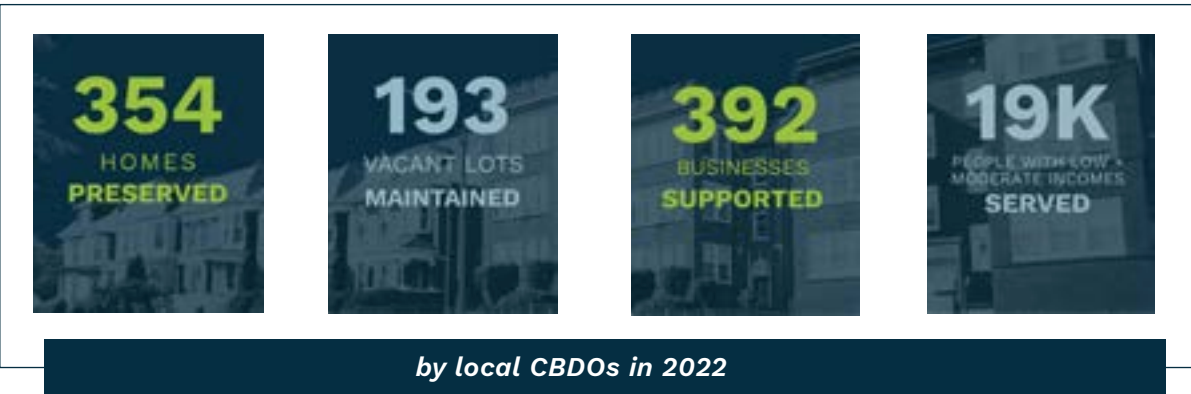
Through the survey, CBDOs reported their overall impact over the past year, along with their major areas of focus. Many CBDOs share similar programmatic priorities, including neighborhood revitalization and stabilization; affordable housing production and home repair; community gardening, greening, and beautification; and economic development. The impacts they achieved span several key areas: preserving homes, maintaining vacant lots, supporting businesses, serving low- to moderate-income individuals and families. Among most CBDOs, economic development was identified as the area most in need of capacity building.
Organization Size + Revenue
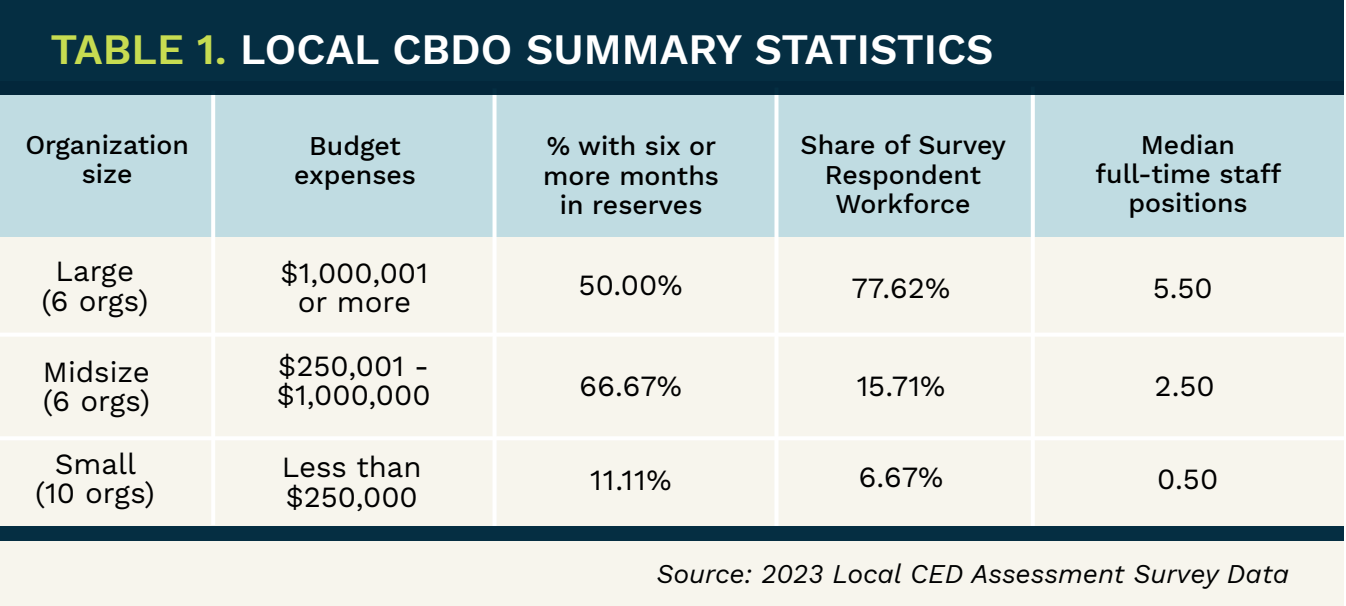
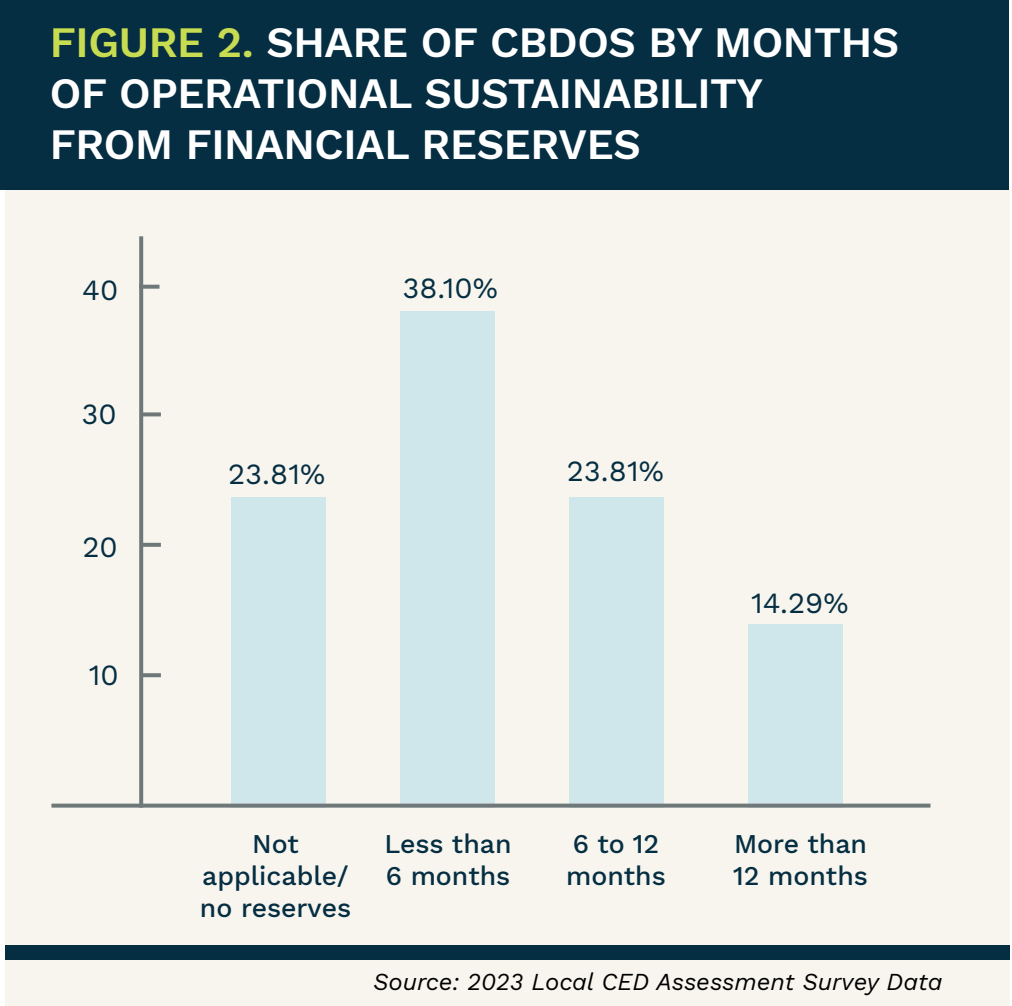
From the data gathered, the group was able to assess the financial status of each organization. Of these respondents, the majority of organizations have budget expenses below $250,000. The majority of midsize and large organizations had six or more months of reserves available to them. Revenue generated by larger organizations is generated from earned income while small organizations depend on federal funding and grants.
Community Aligned
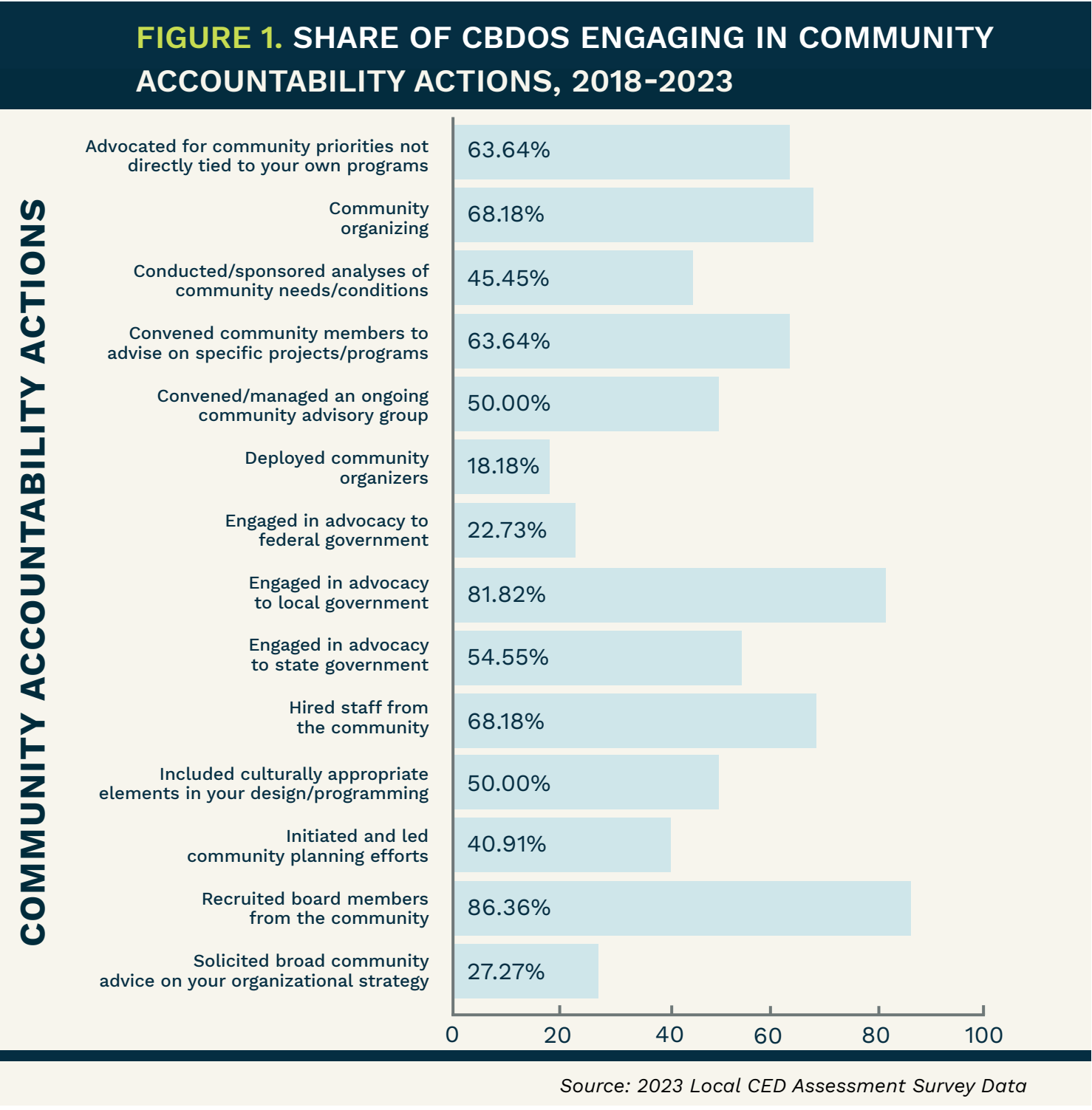
Community perspectives play a central role in shaping CBDOs' operational decisions and advocacy efforts, though there remains a need for organizations to be more deeply shaped by the communities they serve. Having community impact allows CBDOs to ensure their programs are relevant, responsive, and aligned with community needs, making neighborhood planning and community engagement training an important area of growth. United Way has identified community building as the highest priority need, encompassing people knowing one another, building social resources, and supporting community issues and policy changes. Efforts that residents associate with community engagement include neighborhood-based organizations, local leadership, and promoting equity. CBDOs provided insight into their engagement with community partners and the ways these partnerships influence decision-making and advocacy, with a large number utilizing key stakeholder processes to guide their practices, while fewer than half are actively initiating and leading community planning efforts.
Geographic + Racial Disparities in Resource Allocation
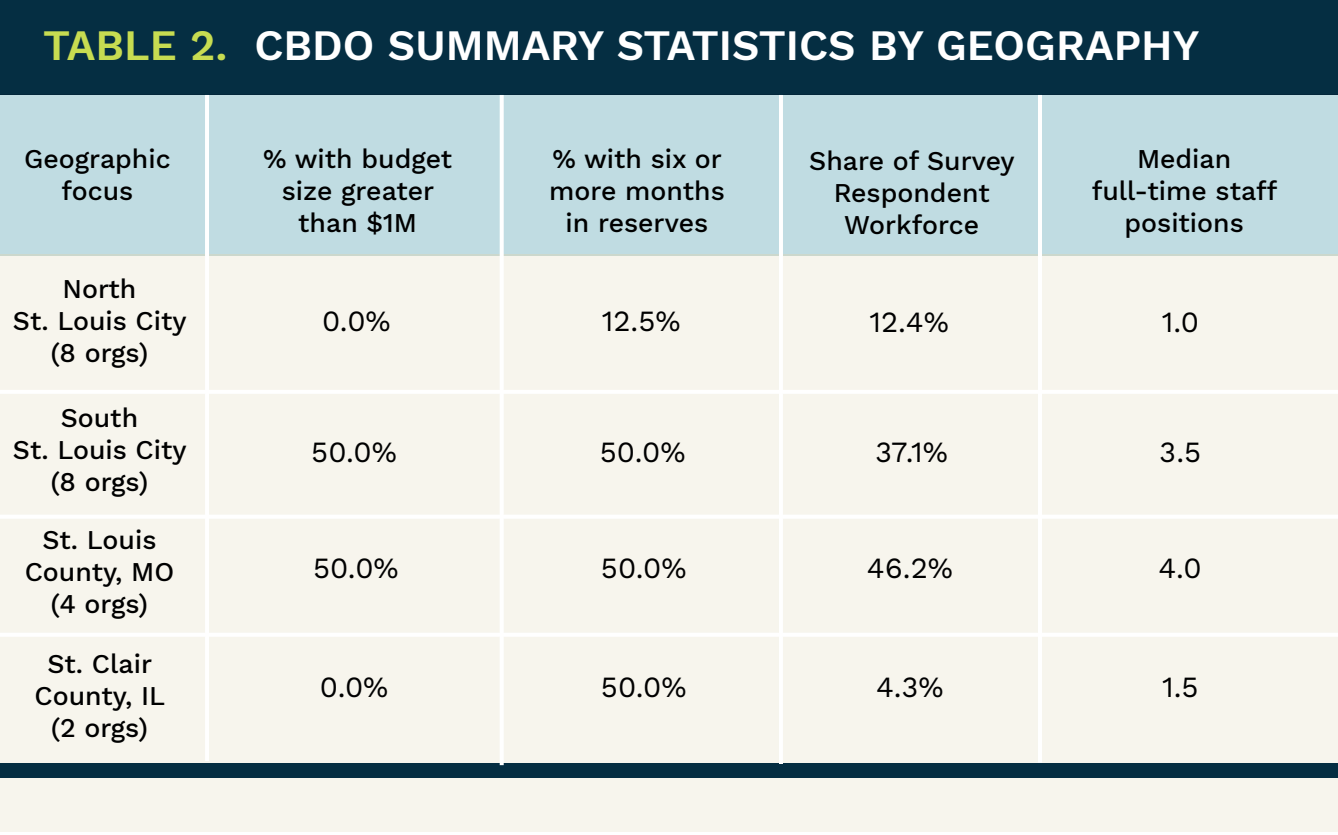
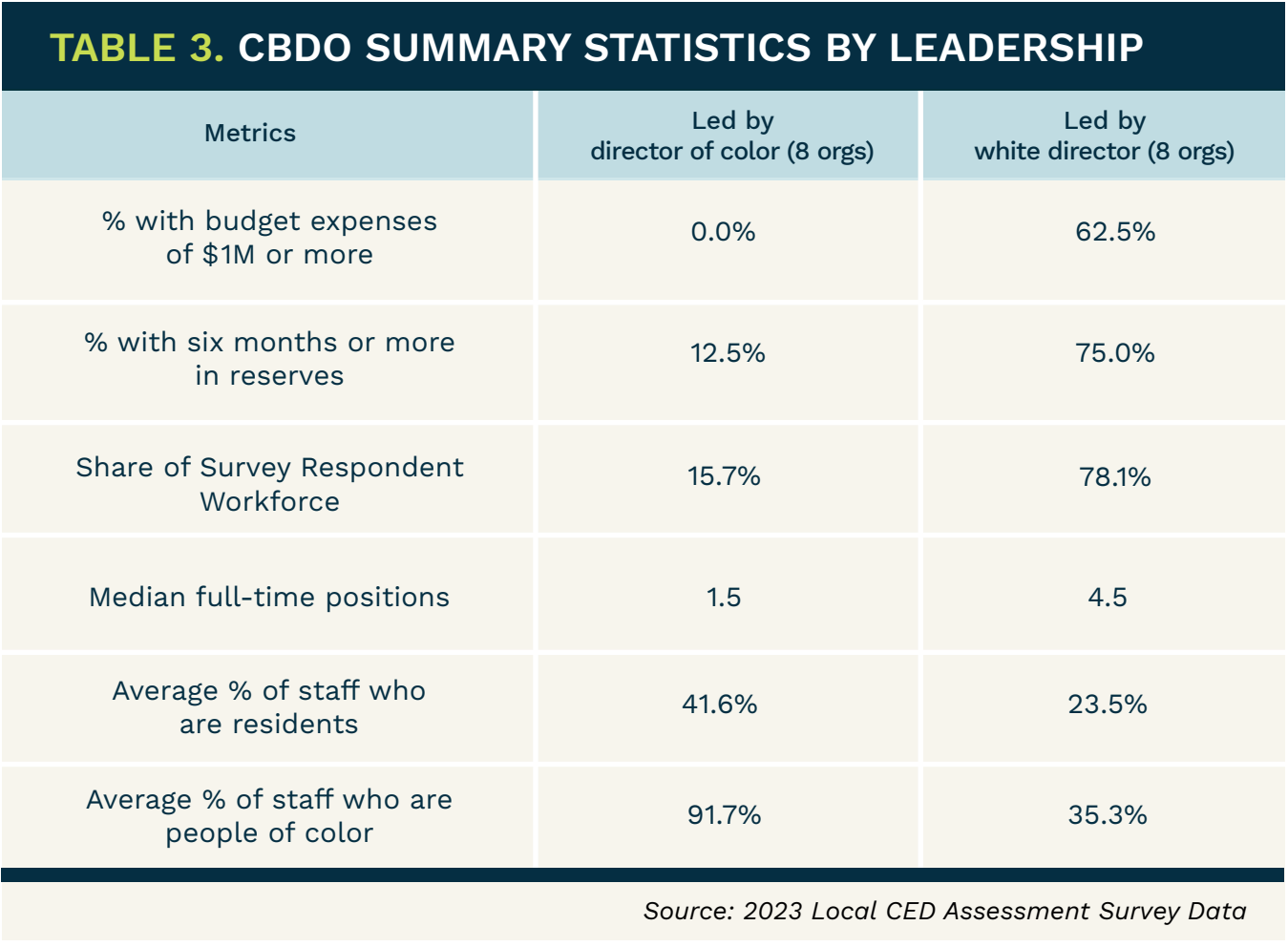
CBDOs continue to face inadequate and insufficient resource allocation for development efforts especially for organizations in North St. Louis who have directors of color. These organizations are operating with fewer resources, reserves, and staff, which impact the use of unrestricted funds, constrain capacity for growth, and the ability to sustain community impact. The current philanthropic structure continues to perpetuate this disparity as the majority of philanthropic funding goes to organizations with budgets between $2M and $10M, which often exclude organizations with directors of color and CBDOs in North St. Louis from significant financial support. The local community needs to reconsider how foundations and funders invest in these organizations. These directors also encounter systemic political and funding barriers, including limited access to networks to build relationships with potential funders, leaving them to see relationships with banking managers as a capacity need.
Staffing + Volunteer Dependency
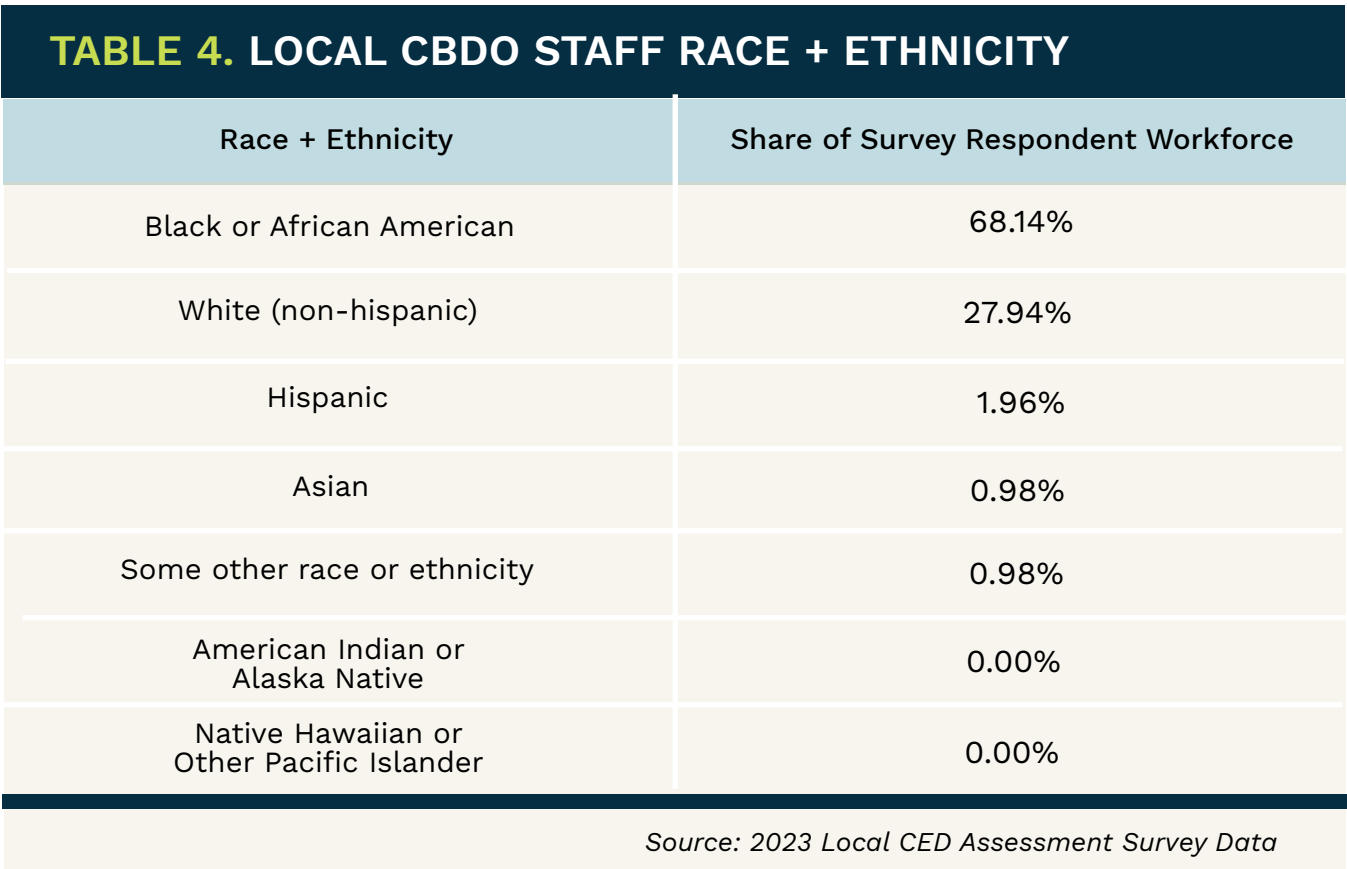
Among community development professionals, compensation remains a significant challenge as the majority receive compensation below the living wage. With wages not rising to or above the living wage, CBDOs may face high turnover, burnout among staff, and difficulty attracting talent. Of reporting organizations, 30% pay employees less than $30,500 annually and nearly half earn under $49,000. Those receiving these lower wages often are people of color and women who are often deeply connected to the communities they serve. Several organizations are unable to hire staff; instead they must rely entirely on volunteers. Lacking a sufficient compensation structure can limit organizational stability, growth, and capacity. Bringing wages to at least the living wage allows for the strengthening of staff morale, organizational longevity, and the community relationship that shape CBDOs impact efforts.
Crisis of Underinvestment
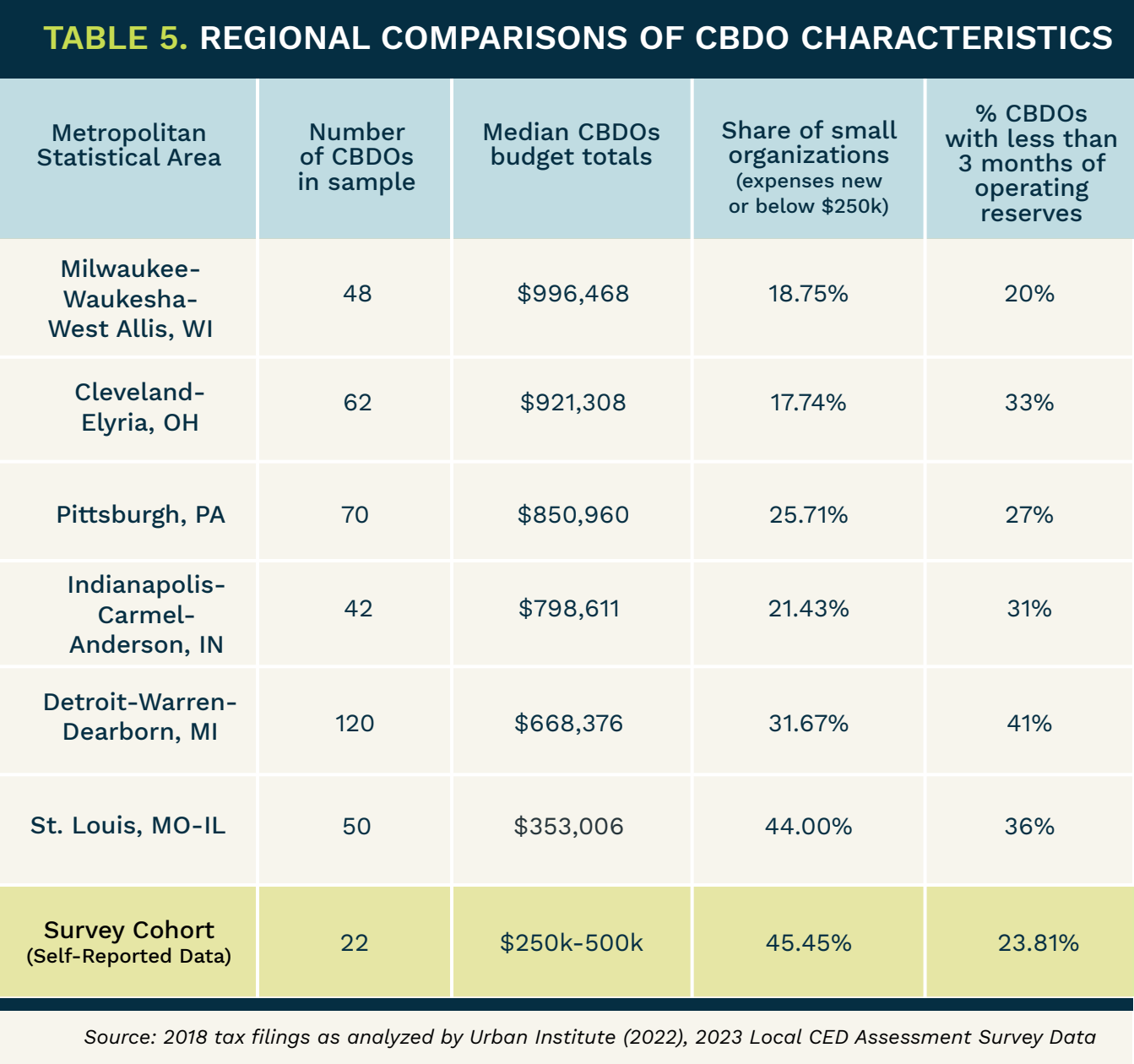
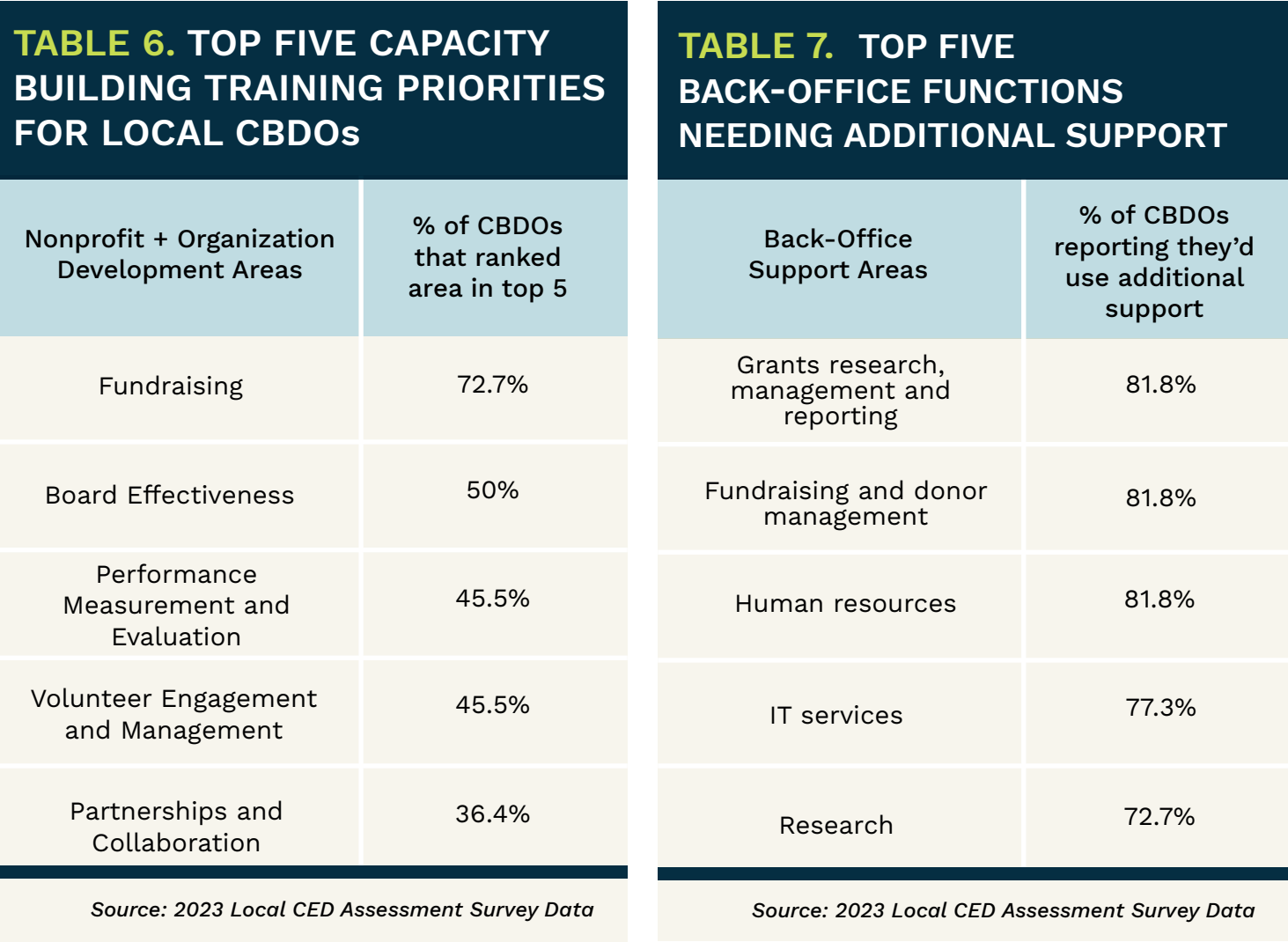
Local CBDOs have historically experienced significant disinvestment. Of these organizations, their budgets tend to be three to five times lower than CBDOs across the nation making them some of the smallest and most financially constrained CDOs in the county. The median local organizational budget tends to fall between $250,000 to $500,000. This chronic underinvestment concentrates resources among CBDOs with budgets over $1M, leaving smaller CBDOs without the necessary reserves or capacity to sustain economic crises. To address this challenge, CBDOs have identified the needs to receive support in fundraising, board effectiveness, grant management, and human resources. Without these supports, residents and neighborhoods are unable to have their needs met and represented. Investing in CBDOs allows for greater community impact and enables for the organizations to remain viable, responsive, and effective partners in long-term neighborhood equity.
To read the full report, please Click Here to visit Invest STL.
