
What We Learned from 18 Months of Equitable Building Performance Work in St. Louis
When people hear terms like "building performance standards" or "building decarbonization," they often think about energy efficiency, climate goals, or technical building upgrades. But over the last 18 months, we’ve learned that the conversation is ultimately about something much more personal: healthier homes, lower utility bills, housing stability, and stronger neighborhoods.
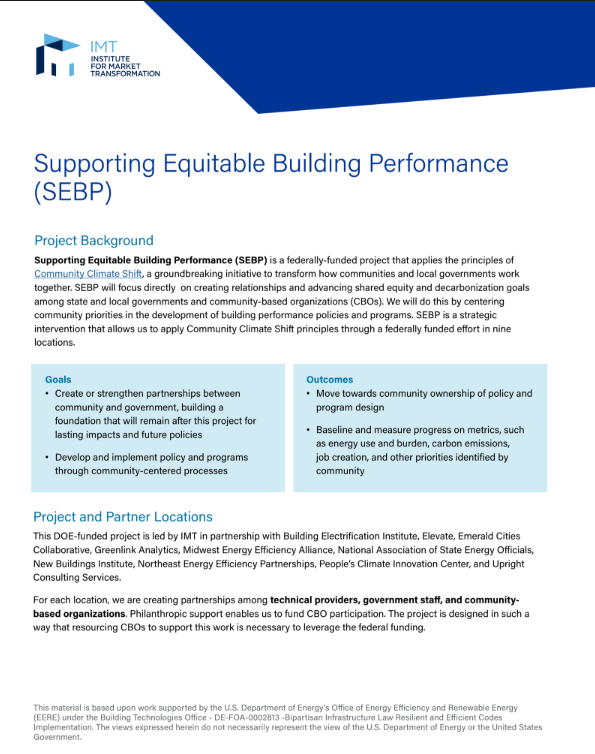
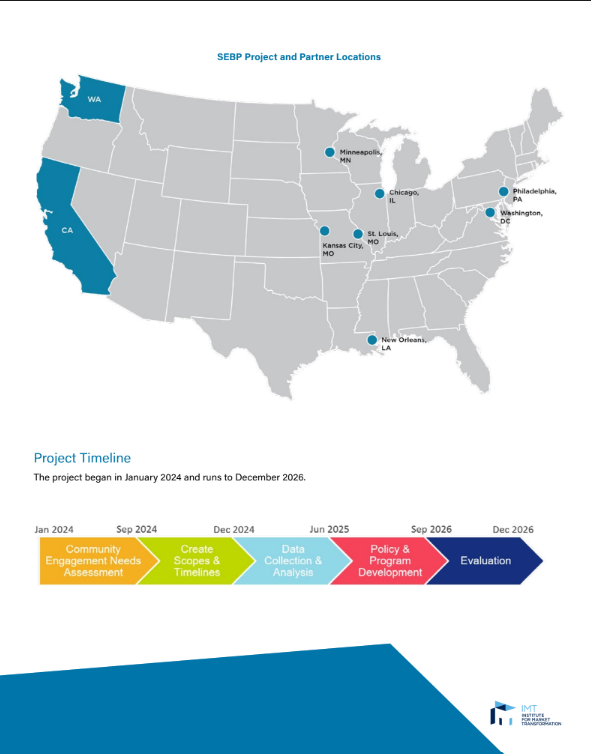
Through the Supporting Equitable Building Performance (SEBP) project, CBN partnered with the City of St. Louis Office of Building Performance, Missouri Gateway Green Building Council, and the Institute for Market Transformation to explore how building performance policies and programs can better reflect community priorities and improve outcomes for residents.
The project combined technical analysis, community engagement, affordable housing research, and collaborative learning to better understand the relationship between buildings, energy costs, housing affordability, and neighborhood well-being.
As the formal project concludes, several important lessons stand out.
Building Performance Is About People, Not Just Buildings
One of the clearest findings from the project was that residents rarely think about building performance in technical terms. Instead, they care about whether their homes are comfortable, whether utility bills are affordable, whether indoor air quality is healthy, and whether they can remain in their neighborhoods as costs rise.
Through surveys, interviews, and discussions with community stakeholders, participants consistently emphasized that conversations about building improvements must begin with lived experience rather than policy requirements or technical jargon.
Future education and outreach efforts will be most effective when they focus on the everyday benefits residents experience through building improvements, including lower energy costs, improved comfort, better indoor air quality, and healthier living environments.
Affordable Housing Must Be Part of the Solution
A major component of the SEBP project involved developing a comprehensive affordable housing analysis that combined multiple housing datasets into a single resource for the City and community partners.
The analysis revealed that many affordable housing properties in St. Louis are located in smaller buildings that currently fall outside the City's Building Energy Performance Standards (BEPS) requirements. While these buildings may not be covered by existing regulations, they remain critically important to the city's housing affordability landscape.
The findings reinforced that future building improvement efforts cannot focus solely on emissions reductions. Housing affordability, energy burden, and neighborhood stability must remain central considerations when designing future policies and programs.
The project also highlighted significant gaps in available data, particularly around naturally occurring affordable housing. While the analysis provides a strong foundation for future planning, additional work is needed to better identify and understand these properties and their role in maintaining affordable housing opportunities throughout the city.
Trusted Community Voices Matter
Another key lesson was the importance of trusted messengers.
Residents, small property owners, and affordable housing providers are often more likely to engage with information through community-based organizations, neighborhood leaders, and peer networks than through government outreach alone.
CBN members and other community organizations play a critical role in helping translate complex policies into practical information that residents and property owners can use.
The project demonstrated that community engagement works best when local organizations are involved early, have meaningful opportunities to shape conversations, and are recognized as partners rather than simply audiences for outreach.
Data Can Help Drive More Equitable Decisions
The project included a citywide building stock assessment that examined energy use and emissions across commercial and multifamily buildings.
The findings confirmed that larger buildings account for the majority of building-related energy consumption and emissions, supporting the City's current focus on larger properties under Building Energy Performance Standards (BEPS).
At the same time, the analysis identified opportunities to better support smaller multifamily, retail, office, and mixed-use buildings that often face significant financial and technical barriers to making improvements.
The affordable housing and building stock analyses together provide valuable tools for helping policymakers, community organizations, and building owners better understand where investments and technical assistance may have the greatest impact.
Partners also identified the need to establish a long-term home for the affordable housing dataset so that it can continue informing policy, planning, and investment decisions in the years ahead.
Housing Stability Must Remain a Priority
Perhaps the most important lesson from the project is that building decarbonization and housing stability cannot be treated as separate issues.
St. Louis is a majority-renter city, and many residents already face significant housing and utility cost burdens. As building improvement efforts continue, it will be essential to ensure that investments intended to improve building performance do not unintentionally increase displacement risks or create additional financial pressures for renters.
Project partners recommended additional research into tenant protections, housing affordability strategies, and anti-displacement policies to better understand how future building improvement programs can support both climate and community goals.
This work is particularly important in neighborhoods where residents already face high energy burdens and housing affordability challenges.
Building Stronger Partnerships for the Future
Throughout the project, CBN, City staff, housing stakeholders, and community organizations worked to strengthen collaboration and improve communication around building performance issues.
The experience demonstrated that effective community engagement requires more than public meetings or information sharing. It requires ongoing relationships, transparency about decision-making, clear communication, and a willingness to incorporate community perspectives into planning and implementation efforts.
Partners identified opportunities to continue these conversations through future advisory groups, educational initiatives, and collaborative projects focused on housing, energy affordability, resilience, and neighborhood investment.
Looking Ahead
While the Supporting Equitable Building Performance project has come to an end, the work it began is far from finished.
The project leaves behind a stronger foundation of data, relationships, and community-informed recommendations that can help guide future decisions related to housing, building performance, resilience, and neighborhood development.
For CBN, the project reaffirmed a principle that has long guided community development work: meaningful and lasting change happens when residents, community organizations, and public institutions work together to shape solutions.
As St. Louis continues implementing Building Energy Performance Standards (BEPS) and exploring future building improvement strategies, the lessons from SEBP provide a roadmap for ensuring that climate goals, housing affordability, and community well-being advance together, not separately.
By keeping residents at the center of these conversations, St. Louis has an opportunity to create healthier buildings, stronger neighborhoods, and a more equitable future for all.
